Sponsored article
What Do Classic Bolesławiec Patterns Mean and How Do They Influence the Look of the Table?
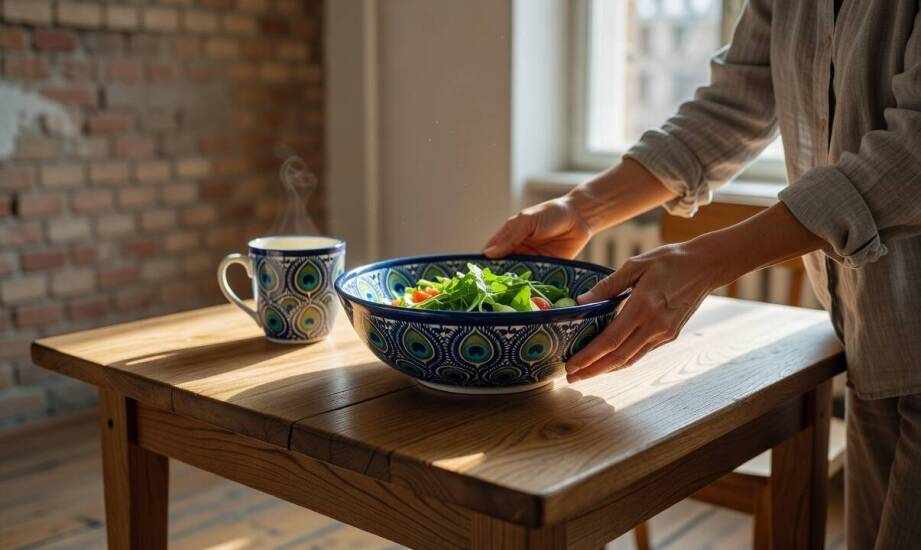
For generations, Bolesławiec pottery has fascinated people with its distinctive patterns, intense cobalt blue and exceptional durability. Hand-decorated tableware combines traditional craftsmanship with everyday functionality, making it much more than simply a way to serve food. What makes pottery from Lower Silesia remain so popular today?
What Makes Polish Pottery from Bolesławiec So Distinctive?
Stoneware clay fired at high temperatures and decorated with deep cobalt blue can transform an ordinary meal into an engaging visual experience. Hand-decorated pieces from Lower Silesia serve a much broader purpose at the dining table than simply holding and serving food.
They are durable objects designed for everyday use, while at the same time carrying a centuries-old story of local craftsmanship.
The substantial feel of the pottery and the smoothness of the fired glaze create a clear impression of handling something durable and carefully made. Tableware covered with repeating, rhythmic patterns can change the character of an entire dining space, giving it a distinctive visual identity.
A simple breakfast setting or a long evening dinner can gain a unique artistic setting thanks to these characteristic decorations.
Recognised around the world, traditional poland pottery from Bolesławiec attracts attention with its intense colours, which create an interesting contrast with the food being served. Every deep plate, rounded mug or large bowl carries traces of the artisan’s work.
How Do Traditional Motifs and the Rhythm of Stamping Shape the Table Setting?
One of the most recognisable Bolesławiec motifs is the peacock’s eye – a pattern consisting of a central dot surrounded by a coloured ring.
Stamped decoration began to develop in Bolesławiec in the late nineteenth century and soon became one of the defining features of local pottery. Sponge stamps, and later other types of stamps, allowed craftspeople to apply underglaze colours in precise, repeating arrangements. Rows of dots, rosettes and peacock-eye motifs could therefore be repeated rhythmically across the curved surfaces of jugs, mugs and plates.
The peacock’s-eye motif itself became particularly strongly associated with Bolesławiec pottery around the turn of the nineteenth and twentieth centuries.
Alongside the iconic peacock’s eye, Polish pottery makers also frequently use simplified botanical forms, including:
small five-petalled flowers,
intricate spirals sometimes described as little snails,
elaborate motifs inspired by clover leaves.
These forms draw inspiration from nature and refer to the rich decorative traditions associated with Lower Silesian craftsmanship.
The deep cobalt blue that dominates traditional Bolesławiec pottery visually brings the entire table setting together. Its intense blue colour highlights the natural colours of the dishes being served. Dense patterns arranged against a light ceramic background can make even a simple breakfast feel more distinctive.
Earthy greens and warm browns, skilfully incorporated into individual details, can in turn give a composition a cosier, more rustic character.
The repetitive, almost hypnotic rhythm of stamped decoration makes Bolesławiec ornamentation immediately recognisable, regardless of changing interior design trends.
From Traditional Craftsmanship to Everyday Rituals at Home
Contemporary Bolesławiec collections show that historical forms can fit naturally into modern homes. High-temperature firing gives stoneware considerable durability, while properly produced pieces can be used in dishwashers and microwave ovens.
This tradition is continued by Manufaktura w Bolesławcu Smoleński & Zwierz, whose collections include hand-decorated tableware designed for everyday use. The company combines traditional decorative techniques with contemporary forms and practical requirements while maintaining the distinctive character of Bolesławiec craftsmanship.
The way a decoration influences the appearance of a piece also depends on its size and intended use.
On a single rounded mug, a dense peacock’s-eye pattern draws attention and can give the morning coffee ritual a more personal character. In a breakfast set, the same motif can be repeated across plates and bowls, creating a coherent visual setting for the meal.
On wide serving platters and large baking dishes, the decoration may instead be concentrated around the outer edges of the piece. This visually highlights the lighter central area and draws attention to the food being served – from roasted meats to colourful salads.
Pottery decorated in this way also works well outside the kitchen cupboard. It is often chosen as a gift, while additional pieces can gradually be added to a growing collection.
Individual items can also serve a decorative purpose and fit naturally into interiors inspired by country or rustic styles.
Choosing the right tableware is largely about finding a balance between aesthetics and functionality.
Bold, densely arranged patterns are likely to appeal to people looking for a strong accent of colour that brings more visual energy to the dining space. More delicate and widely spaced stamped motifs, on the other hand, can provide a calmer backdrop that does not compete with the colours of the food.
Regardless of the chosen pattern and colour, authentic pottery from Lower Silesia retains its distinctive, timeless appeal.
Using durable, handcrafted ceramics every day allows people to enjoy both the practical qualities of stoneware and the beauty of hand decoration. It is precisely this combination of functionality, tradition and distinctive design that has allowed Bolesławiec pottery to remain popular on dining tables for generations.
Article categories
You might be interested
